


Chickpeas
In different cultures, there are different names for chickpea: Egyptian peas, mutton peas, nakhad. The product is especially popular in oriental recipes. It has a pleasant, sweetish taste and a spicy, nutty aroma. Creamy beans are rich in protein and fiber, making them an essential ingredient in vegetarian cuisine. They make unusually delicious dishes: hearty side dishes, gourmet salads, interesting snacks, thick soups, delicate sauces and even desserts.
In different cultures, there are different names for chickpea: Egyptian peas, mutton peas, nakhad. The product is especially popular in oriental recipes. It has a pleasant, sweetish taste and a spicy, nutty aroma. Creamy beans are rich in protein and fiber, making them an essential ingredient in vegetarian cuisine. They make unusually delicious dishes: hearty side dishes, gourmet salads, interesting snacks, thick soups, delicate sauces and even desserts.
Three facts about organic chickpeas:
- Chickpea beans provide the body with valuable micro- and macroelements such as iron, calcium, potassium, magnesium, phosphorus and zinc. Their importance to various biological processes can't be overestimated. They are very important to the functioning of the immune and nervous systems, healthy bones and teeth, energy production, accelerating cell regeneration, etc. Vitamin K, contained in chickpeas, controls blood clotting, while Omega-3 and Omega-6 acids are beneficial to the cardiovascular system and the brain.
- Before eating chickpeas, the beans must be soaked in water at room temperature for 5-7 hours. This will allow them to absorb enough moisture and cook faster. In order not to hinder their softening, add salt and spices at the end of the cooking process.
- Nutritionists advise to use sprouted chickpeas to cleanse and heal the body. Chickpea sprouts are an excellent prophylactic agent against cataracts, colds, flu, and also help lower blood cholesterol levels. Chickpeas can be germinated at home.
| Nutrition value | |
|---|---|
| Calories | 355 kcal |
| Proteins | 20,1 g |
| Fats | 5,2 g |
| Carbohydrates | 60,7 g |
| Dietary fibres | 17,4 g |
| Water | 11,27 g |
| Ash | 7,68 g |
| Saturated fatty acids | 0,63 g |
| Vitamins | |
| Vitamin PP | 1,54 mg |
| Vitamin B1 (thiamine) | 0,48 mg |
| Vitamin B2 (riboflavin) | 0,21 mg |
| Vitamin B5 (pantothenic acid) | 1,59 mg |
| Vitamin B6 (pyridoxin) | 0,54 mg |
| Vitamin B9 (folic acid) | 557 mcg |
| Vitamin B4 (choline) | 95,2 mg |
| Vitamin PP (B3, niacin equivalent) | 4,62 mg |
| Macroelements | |
| Calcium | 105 mg |
| Magnesium | 115 mg |
| Sodium | 24 mg |
| Potassium | 875 mg |
| Phosphorus | 366 mg |
| Microelements | |
| Iron | 6,24 mg |
| Zinc | 3,43 mg |
| Copper |
0,85 mcg |
| Selenium | 8,2 mcg |
| Manganese | 2,2 mg |
| Information on product weight: | |
| Glass 250 ml = 210 g (745.5 kcal) | |
| Glass 200 ml = 170 g (603.5 kcal) | |
| Tablespoonful (heaped spoon, except liquid products) = 25 g (88,75 kcal) | |
| Teaspoonful (heaped spoon except liquid products) = 8 g (28.4 kcal) | |
Chemical composition of a product is characterized by calories, proteins, fats, carbohydrates, dietary fibres and vitamins. For organic products, these parameters significantly depend on natural factors – air temperature and precipitation during vegetational season, dry or rainy season, geographic latitude and longitude of cultivation, botanical grain varieties, and soil type. It is impossible to foresee all the factors, so these values are average and indicative only.
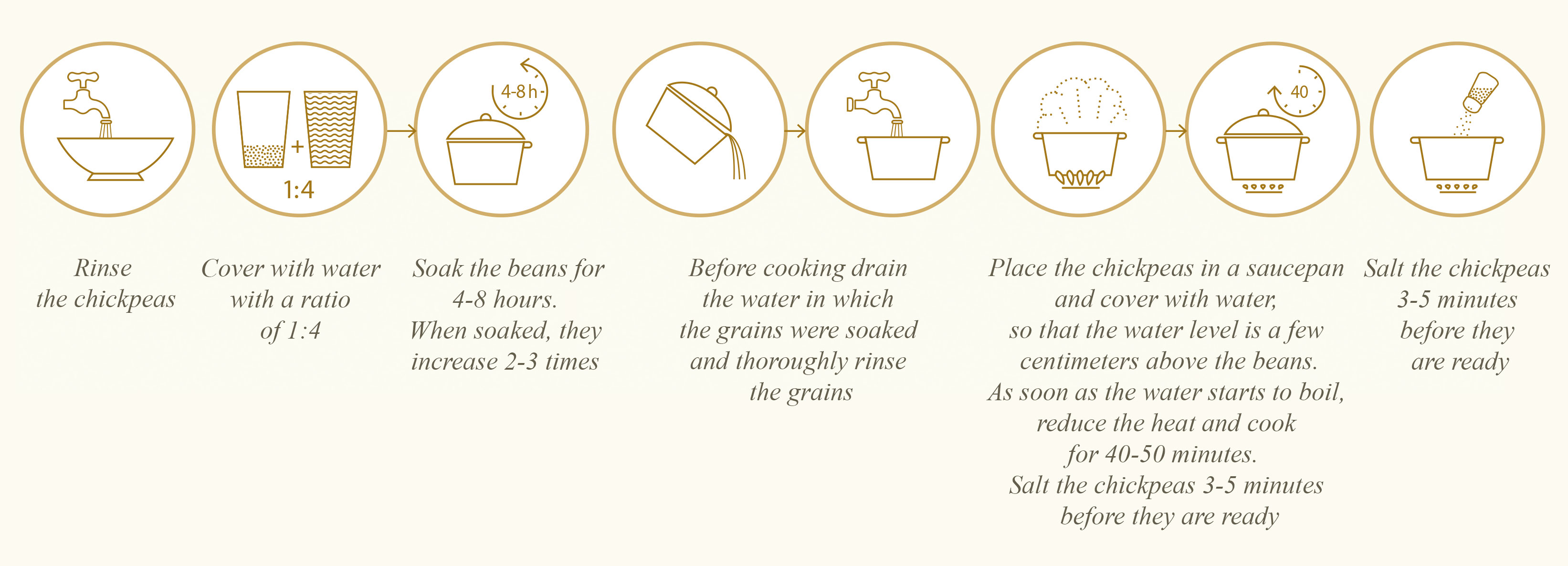
Easy ways to cook organic chickpeast
Easy ways to germinate the chickpeas

Healthy recipes with chickpeas

Humus
Preparation: Boil the chickpeas. Strain and place in a blender with garlic, butter, tahini, zest, spices and yogurt. Blend until smooth, add lemon juice and continue blending until smooth, pouring in a thin stream of water. You may need a little more or a little less water to reach the desired consistency. Place the hummus in a serving bowl, sprinkle with olive oil and with hot pepper or paprika. Serve with your favorite toppings like crackers or vegetables.
